Hola,
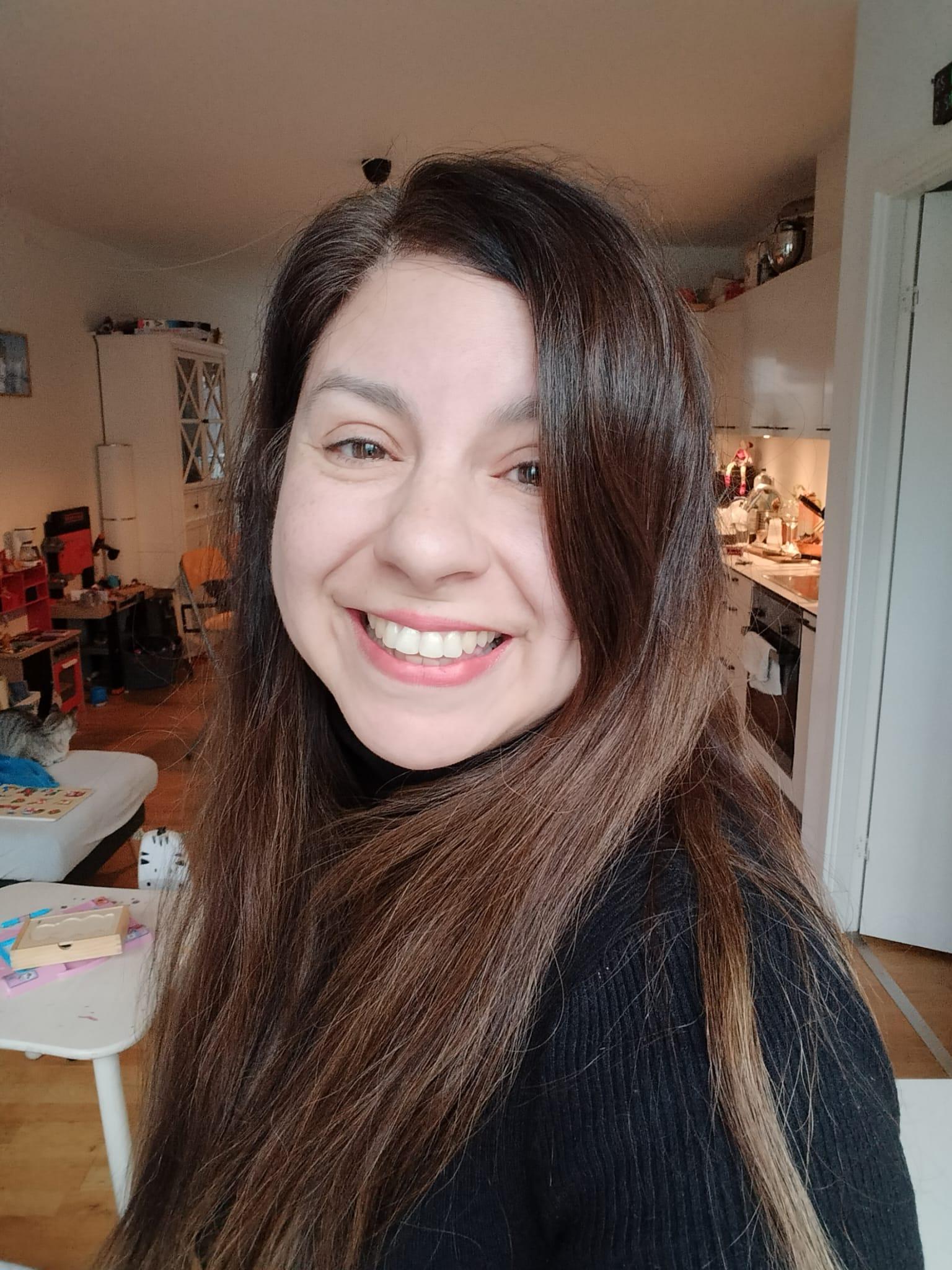
I'm Estefanía.
Native Spanish teacher from Argentina, currently writing from Copenhagen. Ten-plus years helping people fall in love with the language — and the absurdly diverse world behind it.
I write graded short stories using Comprehensible Input: stories pitched just above your current level, so your brain acquires language naturally — the same way you learned your first one.
Every story I write is a small trip somewhere in the Spanish-speaking world. 22 countries to get to, hundreds of accents, thousands of stories worth telling.
How this all started.
I started teaching Spanish almost by accident. I was studying linguistics, helping a friend with her grammar, and she said — between sips of mate — "you should do this for real." So I did.
What I noticed pretty quickly: my students could conjugate perfectlyin class and then completely freeze when they tried to read a normal book. Grammar wasn't the problem. The problem was that nobody had given them anything fun to read at their level.
So I wrote one. Then another. Eight years later, this is the thing.
I don't believe Spanish should feel like homework. It should feel like a Saturday afternoon with a good book and a coffee. Even when you're still learning.
Every book on this site was written by me, edited by a tiny team of trusted friends, and read out loud at least three times before it went to print. They take a long time. That's the point.
What we stand for.
What we don't.
We've been at this for eight years. Some opinions have set in. Here they are.
If any of this resonates — welcome. Pick a book. Or read a free sample. Or just sit with it for a while.
What is Comprehensible
Input?
A theory developed by linguist Stephen Krashen. The core idea: we acquire language not by memorising grammar rules — but by understanding messages just a little beyond our current level. Krashen calls it i + 1.
No one handed you a grammar textbook as a baby. You just heard language used in context, understood enough of it, and your brain did the rest.
The same process works for a second language — if you give it the right input.
Every story at Short Stories in Spanish is graded to a specific CEFR level (A1–B2) so the reading stays challenging but never overwhelming. That sweet spot is where real acquisition happens.